Discovery & journey mapping
Understand users, their goals, common obstacles, and the key tasks the interface must support.
Experience design
Research-led user journeys, clear information architecture, thoughtful interfaces, and reusable design systems.
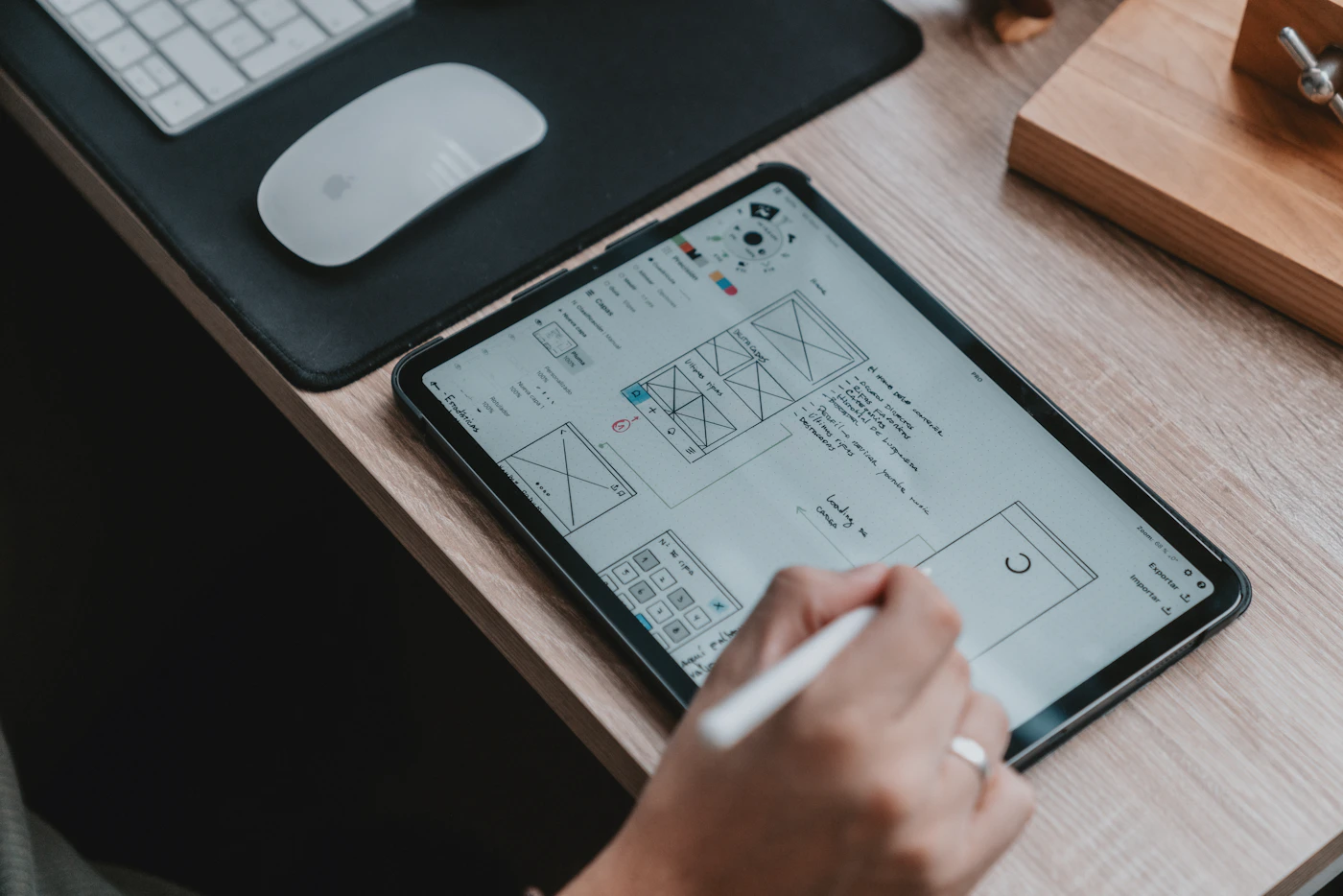
Make the experience clear
Design the journey, not just the screen.
More coherent user journeys
A consistent component language
Design decisions grounded in real use cases
A closer look / Experience design

Good product design makes the next action feel obvious. We look at user goals, content hierarchy, navigation, accessibility, and device behaviour before refining the visual language. The result is a system that feels consistent because its decisions are connected.
The system
A useful interface supports a complete task from the first question to a confident next step.
Help people understand where to begin.
Present information in a clear, useful order.
Make the primary action easy to recognise and complete.
Give feedback and a natural path to the next task.
Capabilities
These capabilities can be combined into one engagement or prioritised in stages, depending on your current product and operating needs.
Understand users, their goals, common obstacles, and the key tasks the interface must support.
Organize pages, content, navigation, and terminology so the product is easier to understand.
Build a coherent visual language with reusable components and clear interaction patterns.
Consider mobile, tablet, and desktop behavior from the start rather than treating smaller screens as an afterthought.
Explore important flows and test assumptions before committing to a full implementation.
Improve readability, interaction clarity, keyboard support, and inclusive patterns.
How the work takes shape
The sequence below is tailored to this discipline. The exact scope is agreed around your users, systems, and constraints.
Understand users, business goals, constraints, and existing friction.
Create flows, page structure, and content hierarchy.
Prototype patterns, visual language, and responsive states.
Review usability and prepare a consistent implementation system.
Where it makes sense
We make the structure understandable before polishing the surface. Content hierarchy, key tasks, accessibility, and responsive behavior guide the design system from early concepts through implementation. Design decisions stay connected to the people and business processes the product serves.
Technology areas
Technology choices are confirmed during scoping and depend on the product, integrations, team, security needs, and operating requirements.
Start a conversation
Tell us what you are building, improving, or trying to connect. We can discuss the priorities and a sensible next step.
Explore other capabilities
More ways to move your product forward.